
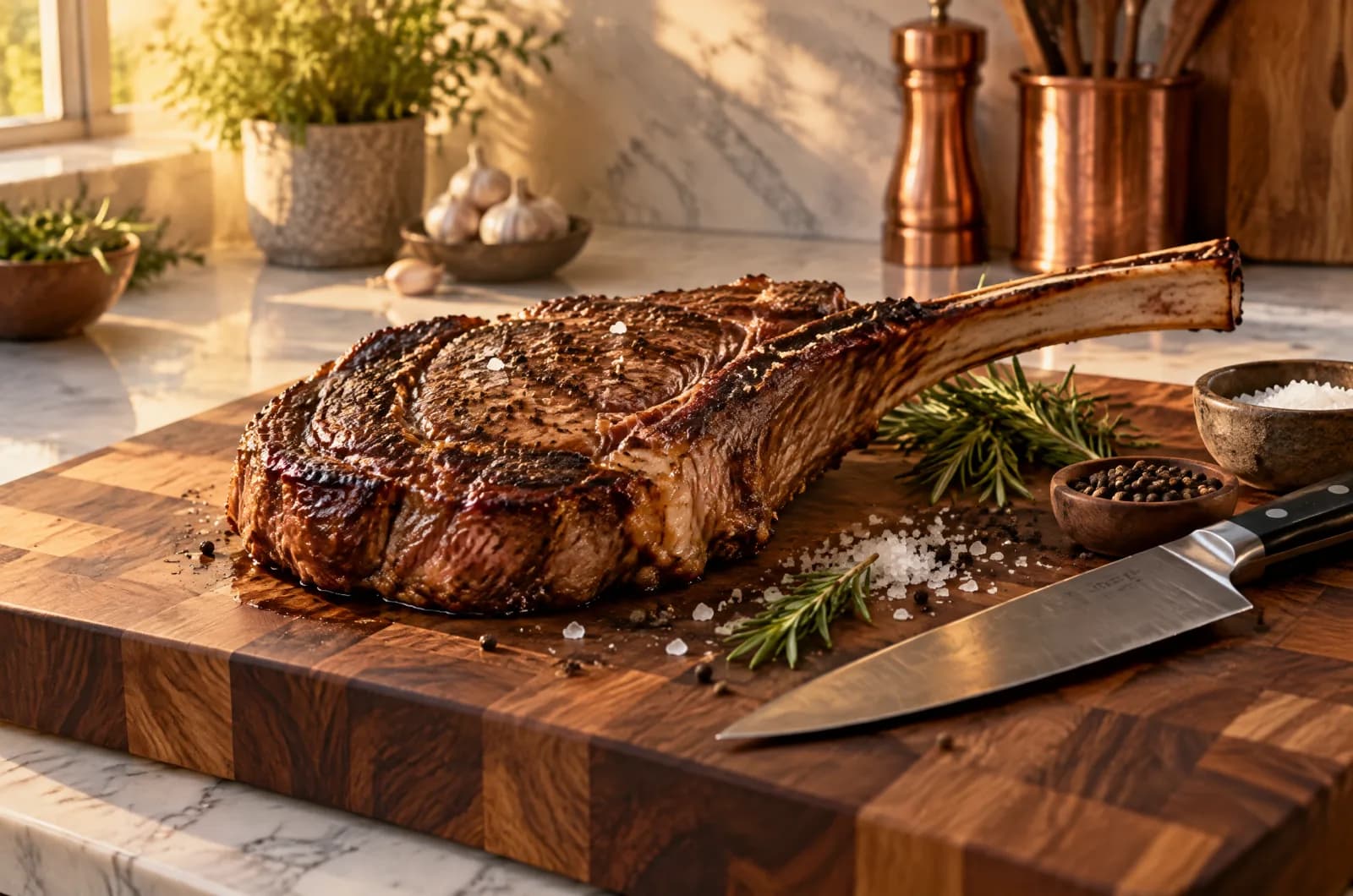
The 3 Best Cutting Boards for Meat in 2026, Reviewed
Disclosure: As an Amazon Associate I earn from qualifying purchases. This page contains affiliate links. If you buy through them we may earn a commission at no extra cost to you — it never affects which products we recommend. How we review
The cutting board you use for meat matters more than the one you use for vegetables. Raw poultry and ground beef carry bacteria that can survive on a porous surface, juice from a prime rib will pool on a flat board and run onto your counter, and a board that dulls your knife means you press harder — which is when slips happen. The right board for meat handles all three problems.
We looked at the three dominant approaches — premium end-grain wood, mid-range plastic with juice control, and budget commercial HDPP — and picked the best option in each category. Your choice depends on how much maintenance you are willing to do and how much counter space you can spare.
Our top picks at a glance
- 1Sonder Los Angeles Alfred End Grain Walnut Cutting BoardEditor's Choice
- 2OXO Good Grips Plastic Carving & Cutting BoardBest Value
- 3Thirteen Chefs Commercial Red Cutting Board 20×15Budget Pick
The reviews
Sonder Los Angeles Alfred End Grain Walnut Cutting Board
A full end-grain American black walnut board with built-in sorting wells, juice groove, and non-slip feet — the board you buy once and use for decades.
What we like
- End-grain construction is gentle on knives and self-heals cut marks
- Deep juice groove holds 3.5 fl oz — enough for carving large roasts
- Built-in sorting compartments keep ingredients organized during prep
What to watch
- Must hand-wash and oil every 2–3 weeks — not low-maintenance
- 7.5 lbs — heavier than most cutting boards
- It costs more than many people spend on all their kitchen tools combined
Best for: Home cooks who regularly carve roasts, brisket, or whole poultry, Anyone willing to commit to oiling a wood board every few weeks, A gift for the cook who values heirloom-quality kitchen tools
OXO Good Grips Plastic Carving & Cutting Board
A large, double-sided plastic board purpose-built for carving — grooved side for meat, smooth side for produce, with a drip-catcher and non-slip feet.
What we like
- Double-sided: grooved for meat, flat for produce — prevents cross-contamination
- Integrated drip-catcher and easy-pour corners contain and drain juices
- Non-slip feet keep the board stable on wet counters
What to watch
- Polypropylene is harder on knife edges than wood or HDPE
- Surface scratches accumulate with heavy use and can harbor bacteria
- Some users report slight warping after repeated dishwasher cycles
Best for: Cooks who handle raw meat daily and want dishwasher-safe cleanup, Kitchens that need one board for both carving and produce, Anyone who wants a large carving surface without the maintenance of wood
Thirteen Chefs Commercial Red Cutting Board 20×15
A restaurant-grade 20×15-inch HDPP board in HACCP red for raw meat — the same material professional kitchens use, at a home-kitchen price.
What we like
- HACCP red color-coding prevents cross-contamination at a glance
- 20×15-inch surface handles full racks of ribs or whole poultry
- NSF certified — approved for professional restaurant kitchens
What to watch
- No juice groove — liquids run off the edges during carving
- 20×15 inches may not fit in a standard home dishwasher
- No non-slip feet — needs a damp towel underneath for stability
Best for: Home butchers and meat processors who want a professional-grade surface, Cooks who color-code their boards to prevent cross-contamination, Anyone who wants a big, cheap board they can replace without guilt
Compare these head-to-head
Frequently asked questions
Is wood or plastic safer for cutting raw meat?
Both are safe when cleaned properly. Plastic is non-porous and dishwasher-safe, which makes sanitization easier. Wood has natural antimicrobial properties, but it must be hand-washed and cannot be sanitized in a dishwasher. The USDA allows both materials for meat preparation. The practical difference is maintenance: plastic is lower effort, wood rewards the effort with better knife feel and durability.
What does HACCP color-coding mean for cutting boards?
HACCP (Hazard Analysis Critical Control Points) assigns colors to cutting boards by food type to prevent cross-contamination: red for raw meat, green for vegetables, blue for seafood, yellow for poultry, and brown for cooked meat. Professional kitchens follow this system, and using a dedicated red board for raw meat at home is the simplest way to eliminate the risk of mixing boards.
How often should I replace a plastic cutting board?
Replace it when deep knife grooves develop that you cannot scrub clean. Those grooves trap bacteria that even a dishwasher cannot fully remove. With daily use, that typically means every one to two years. An inexpensive budget HDPP board makes replacement painless.
Keep reading
Thanksgiving Kitchen Prep Checklist: The Tools and Timeline That Keep You Sane
A practical Thanksgiving prep checklist — the kitchen tools, timeline, and batch-cooking strategy that turn a chaotic holiday meal into a manageable project.

The 3 Best Silicone Spatula Sets of 2026 for Every Budget
Best silicone spatula set compared: HOTEC's five-shape set, ChefAide's seamless five-piece set, and NileHome's budget set with a brush.
The 3 Best Nonstick Pans for Induction Cooktops in 2026
Most nonstick pans don't work on induction. We compared the ones that do — from a Wirecutter pick to a scratch-resistant skillet that handles metal utensils — and ranked them by heating evenness, coating durability, and value.
Looking for something else?
We refresh prices weekly and publish new reviews every week.