
How to Organize a Deep Pantry: A Step-by-Step System That Lasts
Disclosure: As an Amazon Associate I earn from qualifying purchases. This page contains affiliate links. If you buy through them we may earn a commission at no extra cost to you — it never affects which products we recommend. How we review
A deep pantry sounds like a luxury until you use one. Shelves that run 18 to 24 inches deep push everything behind the front row into a blind zone where cans expire, bags spill, and duplicates accumulate because you forgot what was already in there.
The fix is not buying more storage — it is making what you already own visible and accessible from front to back. This guide walks through a zone-based system that works on any shelf depth, starting with the step most people skip: measuring and purging before buying a single container.
Step 1: Empty, purge, and measure every shelf
Take everything out of the pantry and group items on the counter by type: baking staples, grains and pasta, canned goods, snacks, oils and sauces. While the shelves are bare, measure the interior depth, width, and the height between shelves. These three numbers determine which containers and organisers will actually fit — buying before measuring is the reason most pantry projects fail halfway through.
Discard anything expired and consolidate duplicates. Most deep pantries have two or three half-open bags of the same thing because the first bag got pushed to the back and forgotten. This single step typically frees 20 to 30 percent of usable space before you buy anything.
Step 2: Assign zones from front to back
The front six inches of a deep shelf are prime real estate — you see and reach them without effort. The middle zone is accessible with a short reach. The back six inches are the dead zone, and treating them as such is the key insight.
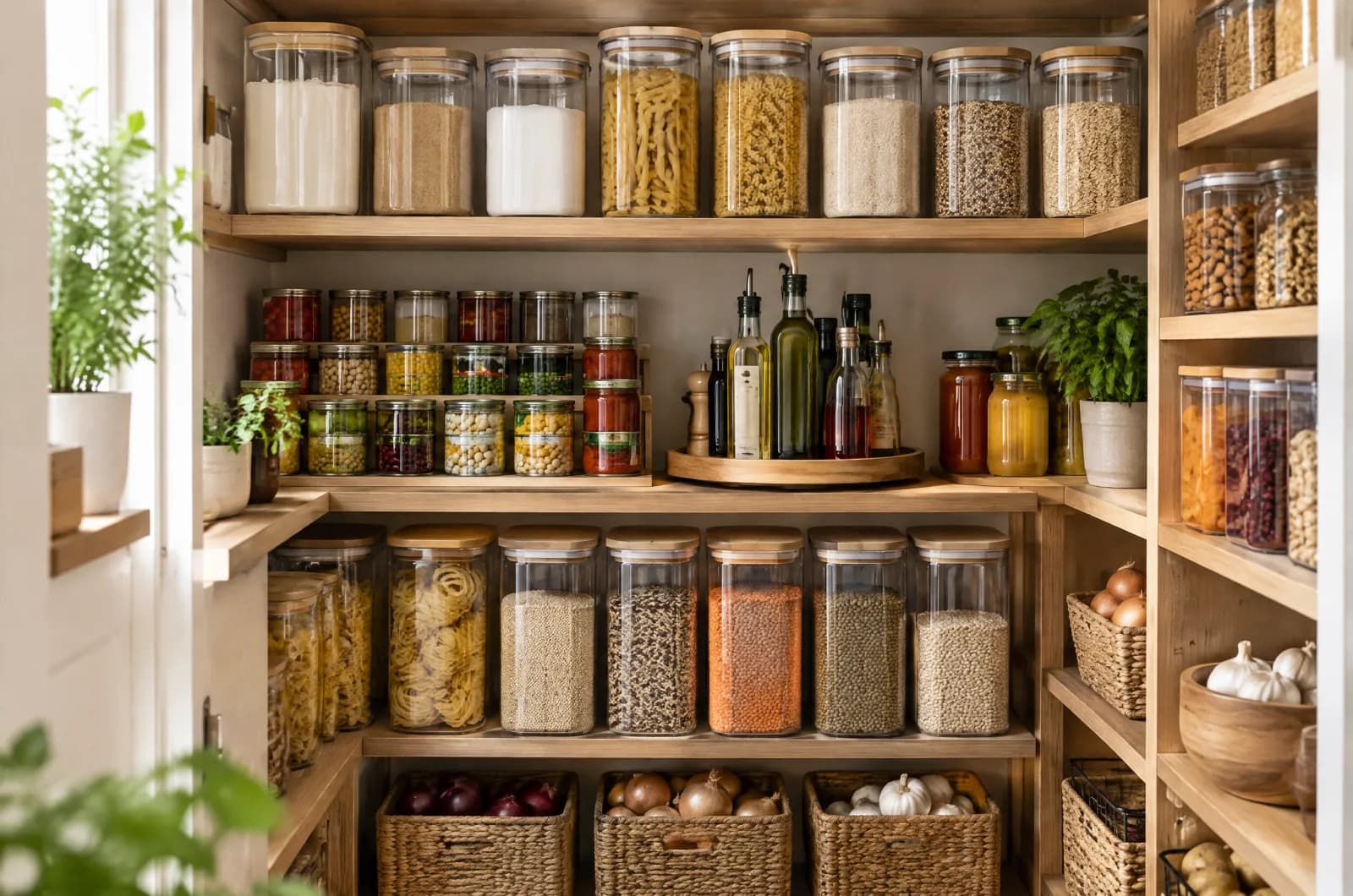
Put items you use daily in the front: oils, salt, the spices you reach for at every meal. Mid-frequency staples like pasta, rice, and flour go in the middle in clear, labelled containers so you can identify them at a glance. The back is for bulk backstock and rarely used items — a reserve bag of flour, holiday baking supplies, the rice cooker manual you keep for some reason. Accept that the back is slow to access and plan around it rather than fighting it.
Step 3: Decant dry goods into clear, stackable containers
Open bags are the enemy of a deep pantry. They cannot stack, they spill, they attract pests, and they hide how much you have left. Decanting into airtight, clear containers solves every one of those problems and is the single highest-impact change in any pantry overhaul.
Use containers with consistent footprints so they stack into columns and make full use of the vertical space between shelves. Square and rectangular shapes waste less shelf area than round ones — in a deep pantry where every inch matters, that geometry adds up fast. Label everything, because decanted flour and powdered sugar look identical.
Vtopmart Airtight Food Storage Containers 24 pcs
A 24-piece BPA-free set with locking lids and reusable labels, and a popular choice for pantry organization.
Chef's Path 32 Piece Airtight Food Storage Containers
Sixteen containers in five sizes with snap-lock lids, labels, and a marker — strong bulk value for a full pantry overhaul.
Rubbermaid Brilliance Pantry 10 Piece Set
Crystal-clear Tritan plastic with latched lids and a bonus measuring scoop. The most complete pantry starter set from a brand that's been making containers for decades.
Step 4: Give bulk staples their own oversized bins
Standard container sets top out around 16 cups, which does not hold a full five-pound bag of flour. If you buy in bulk — and deep pantries usually mean you do — you need at least two large bins for flour and sugar. A container with a carry handle makes a heavy bin manageable when it is loaded with ten pounds of flour.
Place bulk bins on the lowest shelf where the weight is easiest to handle. Keep a measuring cup inside each one so you never need to hunt for it. The back zone of a low shelf is the right spot for bulk backstock that you refill from, not reach for daily.
Shazo 2 PC 11L Flour & Sugar Storage Containers
Two extra-large 11-liter containers with carry handles and measuring cups. Built for 5-pound bags of flour and sugar — the size standard sets skip over.
Step 5: Use tiered risers to see behind the front row
In a deep pantry, the biggest visibility problem is not the back of the shelf — it is the second and third rows. A tiered riser lifts the back rows into view so you can read labels and check levels without moving anything in front.
An expandable riser is worth the small premium because deep pantry shelves vary in width. Measure first, then pick a riser that fills the width without leaving dead gaps on either side. Use one riser per shelf for canned goods and sauces, and your daily-reach items stay in the front zone where no riser is needed.
Lenwi Spice Rack Organizer 3 Tier Expandable
An expandable bamboo 3-tier shelf that adjusts from 8.74" to 15.59" wide. Fits inside cabinets or on countertops — brings every jar label into view.
SIMPLEMADE 3-Tier Spice Rack Set of 2
Two clear 3-tier shelves that hold ~5 standard spice jars per level. Deep shelves prevent spills and work in kitchens, bathrooms, or offices.
Step 6: Add turntables and pull-out bins for the dead zone
The back six inches of a deep shelf are where things go to be forgotten. Two tools fix this: a turntable (lazy Susan) for sauces and condiments that are short enough to spin, and a pull-out bin or basket for taller items that need to slide forward as a group.
A turntable works because it converts a reaching problem into a spinning problem — you rotate the back items to the front instead of reaching past obstacles. Choose one with a raised lip to keep bottles from sliding off. This is the one spot in the pantry where round storage is actually better than rectangular, because the spinning radius needs clearance.
Step 7: Maintain with a monthly five-minute check
No pantry system survives contact with real life unless you maintain it. Set a monthly reminder to do three things: move older items to the front of their zone, check for anything near expiry, and consolidate half-empty containers. This takes five minutes and prevents the slow drift back to chaos that makes people think organising does not work.
The containers and zones are doing the heavy lifting — this monthly pass just resets the entropy that a busy household creates naturally. If you find the same zone out of order every month, the zone assignment is wrong, not the household. Reassign and move on.
Frequently asked questions
How do I organise a deep pantry if I rent and can't drill?
Skip door-mounted racks and use shelf-based solutions only: stackable containers, tiered risers, and turntables. These sit on the existing shelves, need no installation, and come with you when you move. An expandable bamboo riser is the single most effective non-destructive fix.
Should I buy one large container set or mix brands?
One set with consistent footprints is better for stacking and column alignment. If you need both everyday containers and bulk bins, pair a 24-piece standard set with two large-capacity bins — that combination covers a full deep pantry without overspending.
What about canned goods — do they need containers?
No. Cans are already sealed, labelled, and stackable. Use a tiered riser so you can see the labels behind the front row, and group by type: soups together, beans together, tomatoes together. A can organiser rack is optional but genuinely useful if you stock more than 20 cans.
How often should I fully empty and reorganise?
Once a year is enough if you do the monthly five-minute check. A full reset twice a year — once in spring and once before the holiday cooking season — catches items that migrated to the wrong zone and surfaces anything that expired in the back.
Keep reading
Small Kitchen Counter Organization Ideas That Actually Free Up Space
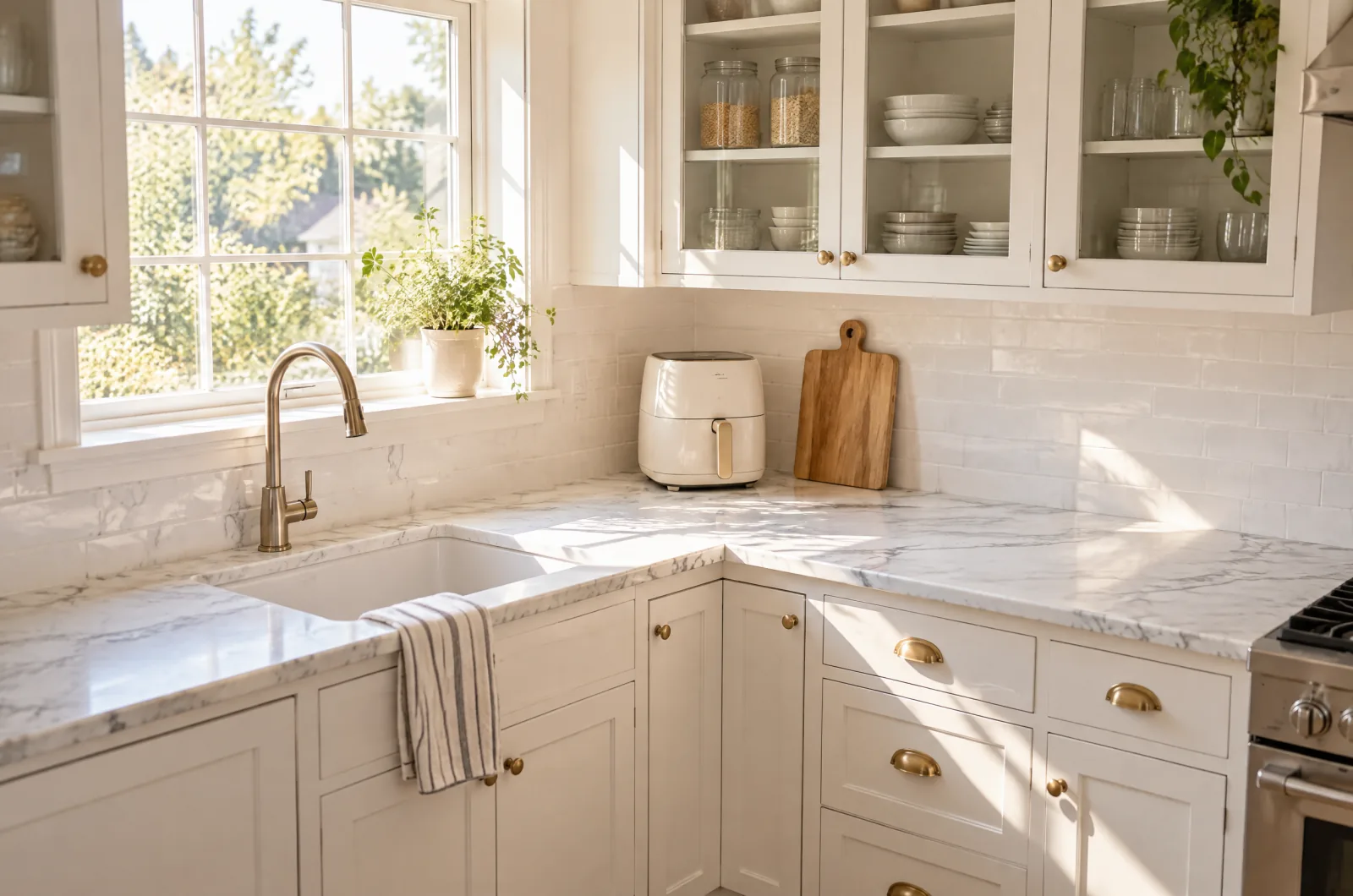
Practical counter-clearing strategies for small kitchens — from the one-appliance rule to vertical storage and wall-mounted solutions that reclaim every usable inch.
The 3 Best Food Storage Containers for Pantry Organization (2026)
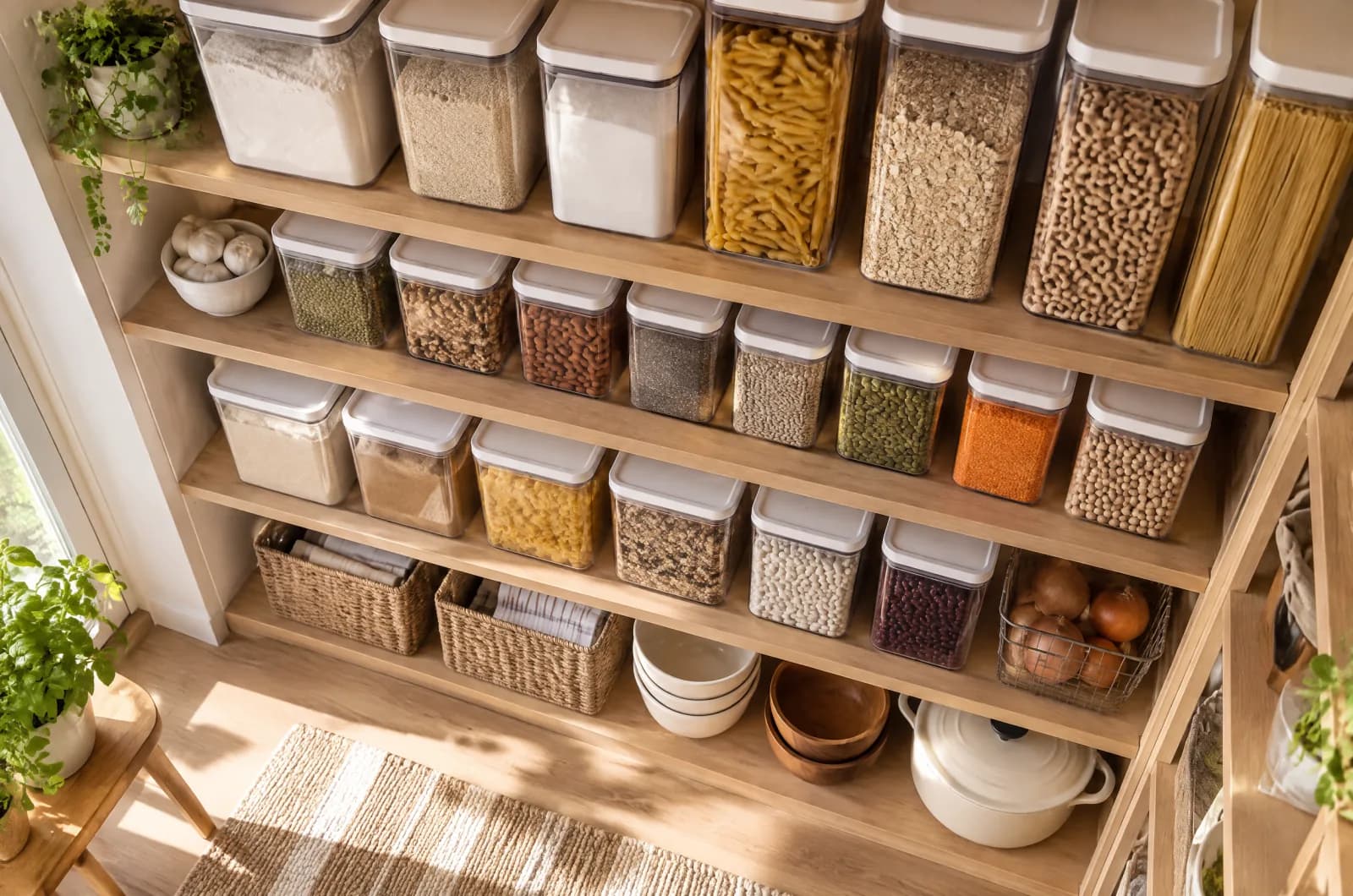
We compared airtight pantry containers by seal quality, stain resistance, and value — from a 32-piece budget set to extra-large 11L bins for flour and sugar. Here are the 3 worth buying.
Small Kitchen Essentials: Gear That Earns Its Counter Space
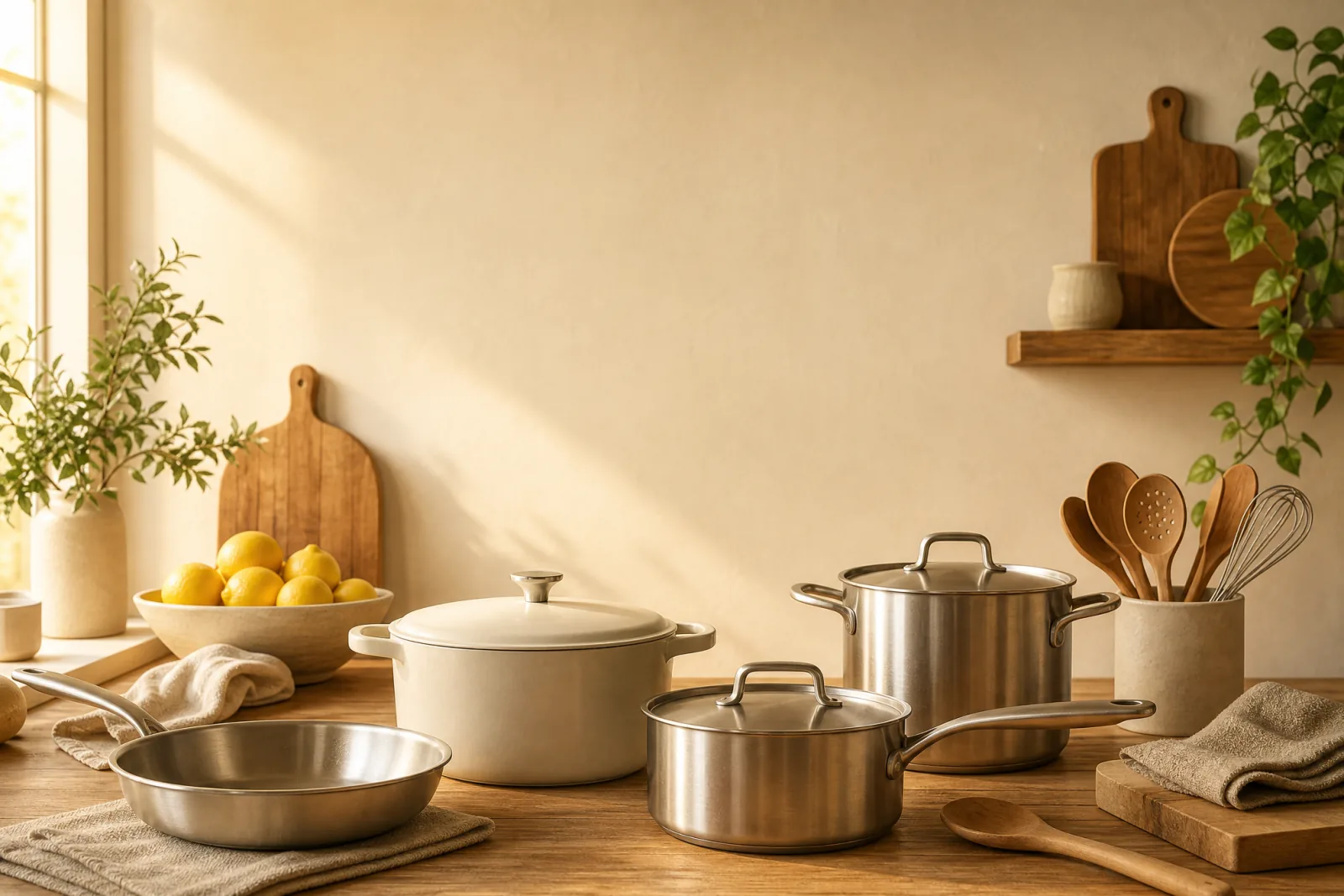
In a small kitchen, footprint is the real price of an appliance. These are the compact and vertical-storage picks that free up the most usable space.